Surah Al-Kahf on Friday: why Muslims read it, and how
Light between the two Fridays: the authentic hadith and their grading, the window from Thursday Maghrib to Friday Maghrib, realistic reading plans, and the four stories with the trial each one prepares you for.
Every Friday, across every time zone, Muslims open the Quran to the same one hundred and ten verses. Surah al-Kahf, the Chapter of the Cave, is the weekly reading the Prophet ﷺ attached to the day of Jumu'ah, with a reward that lasts the whole week: a light between this Friday and the next. This guide sets out what the hadith actually say and how strong each one is, exactly when the Friday window opens and closes, realistic ways to fit twelve pages into a busy day, and the four stories at the heart of the surah, with the trial each one prepares you for.
In short
Read Surah al-Kahf between Maghrib on Thursday and Maghrib on Friday. The narration promising light between the two Fridays is graded authentic by al-Albani and others. You may read it in one sitting or several. Memorising its first ten verses protects from the Dajjal (Muslim 809), and its four stories map the four great trials of faith, wealth, knowledge and power.
Man qara'a sūrata-l-kahfi laylata-l-jumuʿati aḍā'a lahu mina-n-nūri fīmā baynahu wa bayna-l-bayti-l-ʿatīq.
Whoever reads Surah al-Kahf on the night of Jumu'ah, light will shine for him between himself and the Ancient House.
al-Dārimī 3407, from Abū Saʿīd al-Khudrī; graded ṣaḥīḥ by al-Albānī (Ṣaḥīḥ al-Jāmiʿ 6471)
How strong are these? It is worth being honest. Several early critics, including al-Nasa'i and al-Daraqutni, preferred the version that stops at Abu Sa'id, recording it as his own words rather than the Prophet's. Scholars point out that a Companion does not promise a specific reward like this from his own opinion, so such a report carries the weight of something he learned from the Prophet ﷺ. That is why al-Albani and many others graded it authentic, and why reading al-Kahf on Friday has been the practice of the ummah for centuries, recommended in all four schools.
You will also meet narrations that go further: light rising “from beneath his feet to the clouds of the sky”, or sins forgiven between the two Fridays. These come through chains the hadith scholars judged very weak, so they are best left aside. The authentic promise is generous enough.
The surah carries its own blessing beyond Friday too. Al-Bara' narrated that a man was reciting al-Kahf with his horse tethered beside him when a cloud came down and covered him, and the horse grew restless. The Prophet ﷺ said: “That was the tranquillity (sakinah) that descended for the Quran” (Bukhari 5011).
When to read it: Thursday Maghrib to Friday Maghrib
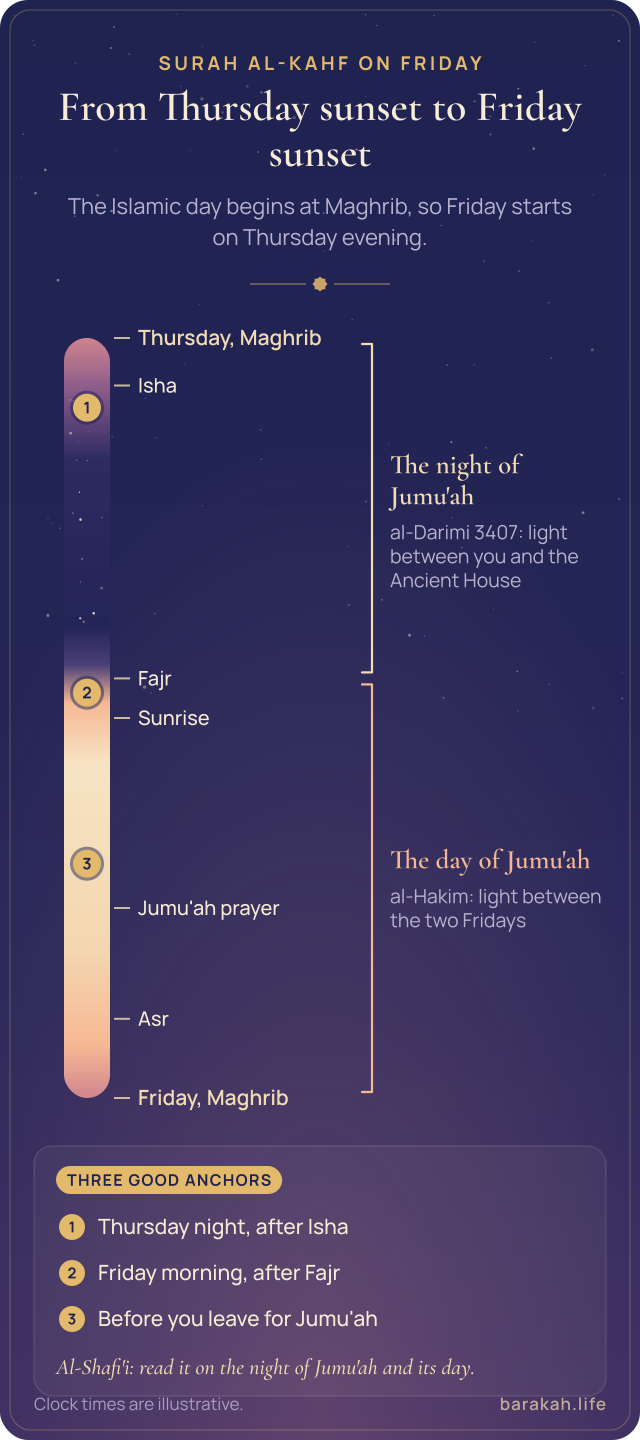
In the Islamic calendar a day begins at sunset, so Friday begins at Maghrib on Thursday evening. Put the two narrations together and you have a window that runs from Maghrib on Thursday to Maghrib on Friday. Imam al-Shafi'i said he liked al-Kahf to be read on the night of Jumu'ah and on its day, and al-Nawawi and most scholars say the same. Some scholars emphasise the daytime of Friday because of the wording “on the day of Jumu'ah”, so if you want to cover every view, read at least part of it on Friday itself.
The Friday window, with the night and the day that the two narrations mention.
Your local prayer times give you both edges of the window. Once Maghrib comes on Friday, the window has closed for that week.
Do you have to read the whole surah?
The reward in the hadith is for reading Surah al-Kahf, so the aim is the whole surah, all one hundred and ten verses. It does not need to be in one sitting; the hadith names the day, not the sitting. That makes it far easier than it looks. The surah fills about twelve pages of the standard Madinah mushaf and takes around twenty to thirty minutes at a steady pace. Pick the plan that fits your week:
One sitting. Thursday night after Isha, or Friday after Fajr when the house is quiet. Twenty to thirty minutes, done before the day begins.
Two sittings. Verses 1 to 59 on Thursday night, verses 60 to 110 on Friday morning. The second half begins with the story of Musa and al-Khidr, a natural break.
Three sittings. Verses 1 to 31 after Fajr (the People of the Cave), 32 to 59 at midday (the Two Gardens and the parables), and 60 to 110 before ‘Asr (Musa and al-Khidr, then Dhul-Qarnayn). About ten minutes each.
If you are new to reading. Read the first ten verses in Arabic, and the rest in a translation you trust. Add a page of Arabic each Friday. Within a few months the whole surah is yours.
Open the surah in our Quran reader, with translation and recitation side by side, starting from the first verse.
The first ten verses and the Dajjal
Abu al-Darda' narrated that the Prophet ﷺ said: “Whoever memorises ten verses from the beginning of Surah al-Kahf will be protected from the Dajjal.” In one narration of the same hadith the words are “from the end of al-Kahf” (Muslim 809). And in the long hadith of al-Nawwas ibn Sam'an describing the Dajjal, the Prophet ﷺ said: “Whoever of you meets him, let him recite over him the opening verses of Surah al-Kahf” (Muslim 2937). Many people memorise both the first ten and the last ten to take in both narrations.
The tenth verse holds the du'a of the young believers as they took shelter in the cave. It is a du'a for anyone who feels surrounded:
Rabbanā ātinā min ladunka raḥmatan wa hayyi' lanā min amrinā rashadā.
Our Lord, grant us mercy from Yourself, and set right for us our affair.
Qur'ān 18:10
The four stories of Surah al-Kahf and their lessons
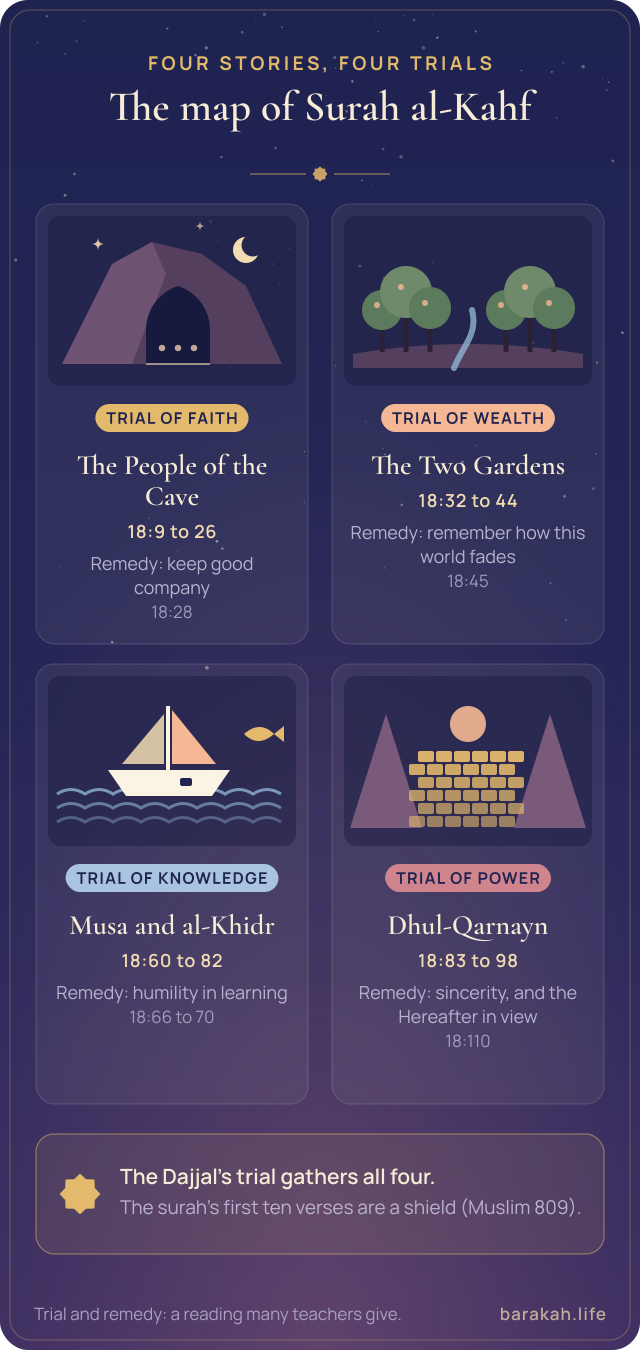
The surah is built around four stories. Many teachers read them as four trials that every generation faces, each with a remedy given in the surah itself. That pairing is a reading from reflection on the text, not a hadith, but it fits the surah closely and it explains why the Dajjal, whose trial gathers all four, is answered by these verses.
Four stories, four trials. The pairing of trial and remedy is a reading many teachers give.
1. The People of the Cave: the trial of faith (verses 9 to 26)
A group of young believers leave a society that punishes them for worshipping Allah alone. They shelter in a cave and Allah puts them to sleep for over three centuries, then wakes them as a sign. The lesson is holding to the truth when your surroundings push against it, and trusting Allah with the outcome. In the middle of the story comes a small instruction with a large reach: never say “I will do this tomorrow” without adding “if Allah wills” (18:23 to 24). The surah then names the remedy for this trial, the company you keep:
And keep yourself patiently with those who call on their Lord morning and evening, seeking His face.
Qur'ān 18:28 (opening of the verse)
2. The Two Gardens: the trial of wealth (verses 32 to 44)
One man owns two flourishing gardens and forgets who gave them. He tells his companion that his wealth will never perish, and doubts that the Hour will come. His believing companion reminds him to say mā shā' Allāh, lā quwwata illā billāh, what Allah wills; there is no power except with Allah. The gardens are destroyed overnight. Straight after, the surah gives the parable of this world as rain that brings up plants which soon become dry chaff scattered by the wind (18:45), and then this:
Wealth and children are the adornment of the life of this world, but the good deeds that endure are better with your Lord in reward, and better to hope for.
Qur'ān 18:46
3. Musa and al-Khidr: the trial of knowledge (verses 60 to 82)
Musa, a great messenger of Allah, is told there is a servant who has knowledge he does not, and he sets out to learn from him. He asks to follow him so that he may be taught some of the guidance the man has been given (18:66), and promises patience. Three times he sees something he cannot accept: a boat damaged, a boy killed, a wall rebuilt for people who refused them hospitality. Only at the end is the wisdom behind each explained. The Prophet ﷺ said of this story: “We wish Musa had been patient, so that more of their story would have been told to us” (Bukhari 3401). The lesson is humility: however much you know, what you do not know is greater, and Allah's decree can be wise where it looks wrong to us.
4. Dhul-Qarnayn: the trial of power (verses 83 to 98)
A righteous ruler is given authority and the means to reach the ends of the earth. He rules justly, and when a people beg protection from Ya'juj and Ma'juj he builds a great barrier of iron and copper, refusing payment. When it is done he calls it a mercy from his Lord, not his own achievement (18:98). Power held as a trust, every success credited to Allah. The surah closes with the remedy for this and every trial, sincerity:
So whoever hopes to meet his Lord, let him do righteous work, and let him not associate anyone in the worship of his Lord.
Qur'ān 18:110 (end of the verse, the last words of the surah)
Listening versus reading
The promise in the hadith is for reading the surah. Listening to the Quran is itself a rewarded act, and following along with a reciter is a good way to learn, but most scholars say listening alone does not take the place of reading for this particular reward. If you cannot read Arabic yet, read along with a recording, word by word, with a translation open. That is reading in progress, and it gets easier every Friday.
If you miss a Friday
There is no make-up reading attached to this sunnah, and missing one Friday is not a sin. Simply begin again next Thursday evening. The deeds most beloved to Allah are the consistent ones, even if small (Bukhari 6464), so a plan you can keep, even ten verses, is better than an ambitious plan you abandon.
The rest of Friday
Al-Kahf is one part of a day the Prophet ﷺ called the best day on which the sun rises (Muslim 854). He told us to send abundant blessings upon him on Friday, for they are presented to him (Abu Dawud 1047, graded sahih by al-Albani). He told us there is an hour on Friday in which a Muslim does not ask Allah for anything good except that He gives it (Bukhari 935); many scholars look for it in the last hour before Maghrib, which is also the last hour of the al-Kahf window. And the Jumu'ah prayer itself, with the ghusl, the early arrival and the listening, is covered in our Jumu'ah prayer guide.
Keep the habit with Barakah Life. Read al-Kahf in the Quran reader with translation and recitation. In the Barakah Life app, the Jumu'ah guide opens from Thursday Maghrib with the Friday sunnahs in order, your al-Kahf reading is tracked verse by verse so you can resume where you stopped, and a Friday reminder brings you back before the window closes.
Questions people ask
Can I read Surah al-Kahf on Thursday night?
Yes. Friday begins at Maghrib on Thursday, and one authentic narration mentions the night of Jumu'ah specifically. Imam al-Shafi'i recommended reading it on the night and the day of Friday.
Can I read it after Maghrib on Friday?
Not for this reward. The window closes at Maghrib on Friday, when Saturday begins in the Islamic calendar. Reading al-Kahf at any time is still good and rewarded as Quran.
Do I have to read the whole surah?
The reward is for reading Surah al-Kahf, so aim for all one hundred and ten verses. You can split it across the Friday window. If you can only manage part, read what you can and build up; the first ten verses carry their own promise of protection.
Can I listen to Surah al-Kahf instead of reading it?
Listening to the Quran is rewarded, but most scholars hold that this specific reward is for reading. Reading along with a recording, or with a translation, is a good bridge while you learn.
Is the hadith about reading al-Kahf on Friday authentic?
Al-Albani and others graded it authentic. Some early critics preferred the version recorded as the words of Abu Sa'id al-Khudri, but a Companion would not promise such a reward from opinion, so it carries the weight of the Prophet's teaching. Narrations about light reaching the sky or sins forgiven are weak.
What does Surah al-Kahf protect you from?
Memorising its first ten verses protects from the trial of the Dajjal (Muslim 809), and one narration says its last ten. Reading it on Friday brings light between the two Fridays.
Does Surah al-Kahf have a sajdah?
No. There is no verse of prostration in Surah al-Kahf. The nearest is in Surah Maryam, the chapter that follows it.
Put al-Kahf on your Thursday evening for the next two months and see what a week lit at both ends feels like. He ﷺ described a light between the two Fridays, and he only ever told the truth.
Sources
Qur'ān 18:10, 18:23 to 24, 18:28, 18:45 to 46, 18:66, 18:98, 18:110 (quran.com).