Wash with intention.
Pray with presence.
Ten short steps, drawn from the Prophet's ﷺ wuḍū as described by his companions in Bukhārī and Muslim. The shared essentials come first, with smaller differences between schools noted where they apply.
- 1
Make the intention
Heart onlyForm the intention in your heart that you are about to perform wuḍū to remove ritual impurity for prayer. There is no spoken phrase agreed on by all schools, the Hanbali, Shafiʿi, and Maliki schools require niyyah but make it silent; the Hanafi school treats verbalization as recommended, not required.
Reported in the Hadith of Intentions: 'Actions are only by intentions.' (Bukhārī 1, Muslim 1907)
- 2
Say Bismillāh
Once, aloud or silentlySay:
بِسْمِ ٱللَّٰهBismillāhIn the name of Allah.The Prophet ﷺ said: 'There is no wuḍū for the one who does not mention Allah's name over it.' (Abū Dāwūd 101, graded ḥasan)
- 3
Wash your hands
3×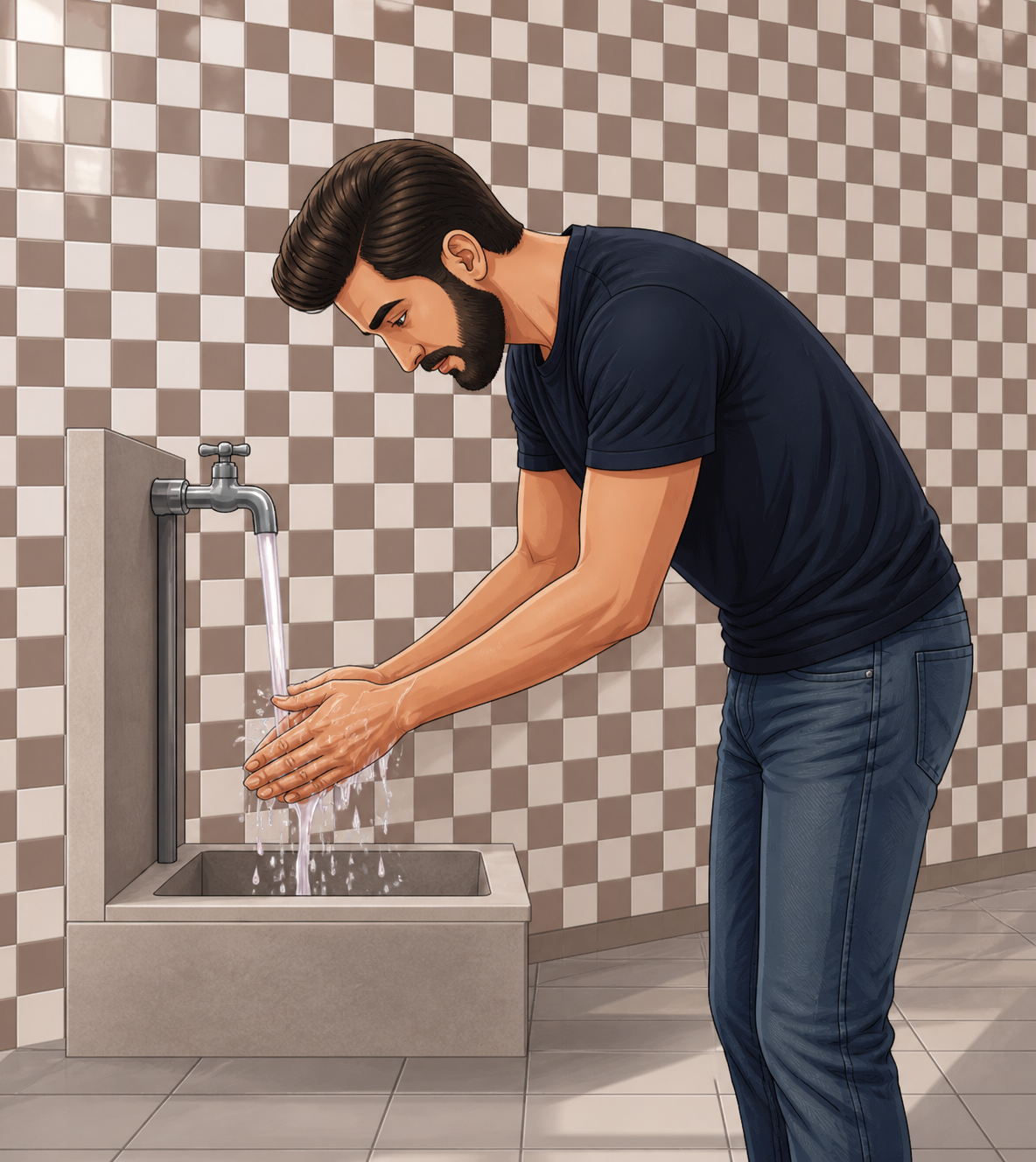
Wash both hands up to and including the wrists three times. Make sure water reaches between the fingers.
ʿUthmān (RA) called for wuḍū water and washed his hands three times. (Bukhārī 159)
- 4
Rinse your mouth
3×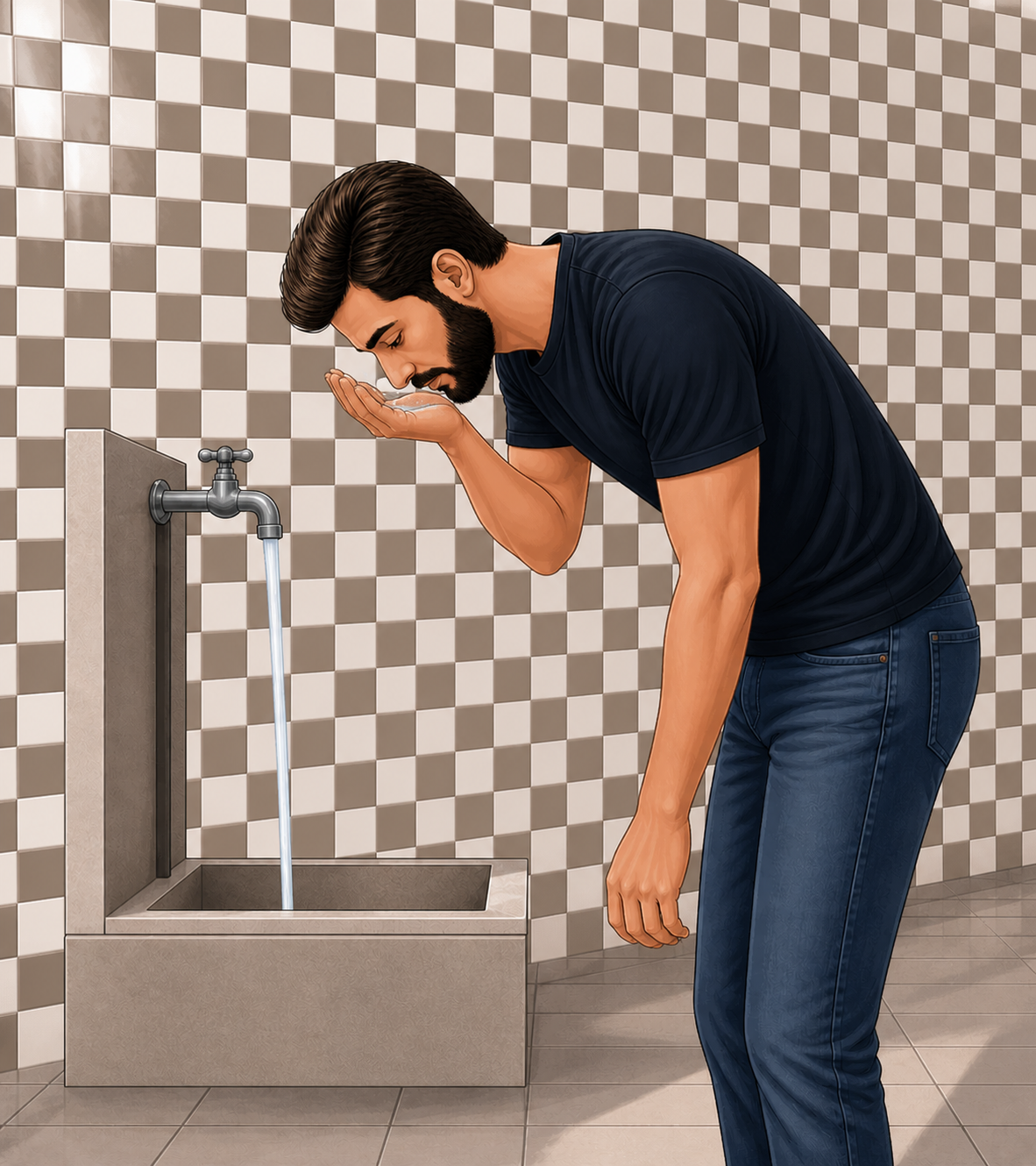
Take a handful of water into your mouth, swirl it around, then spit it out. Do this three times. If you are not fasting, gargle the water back as well.
- 5
Rinse your nose
3×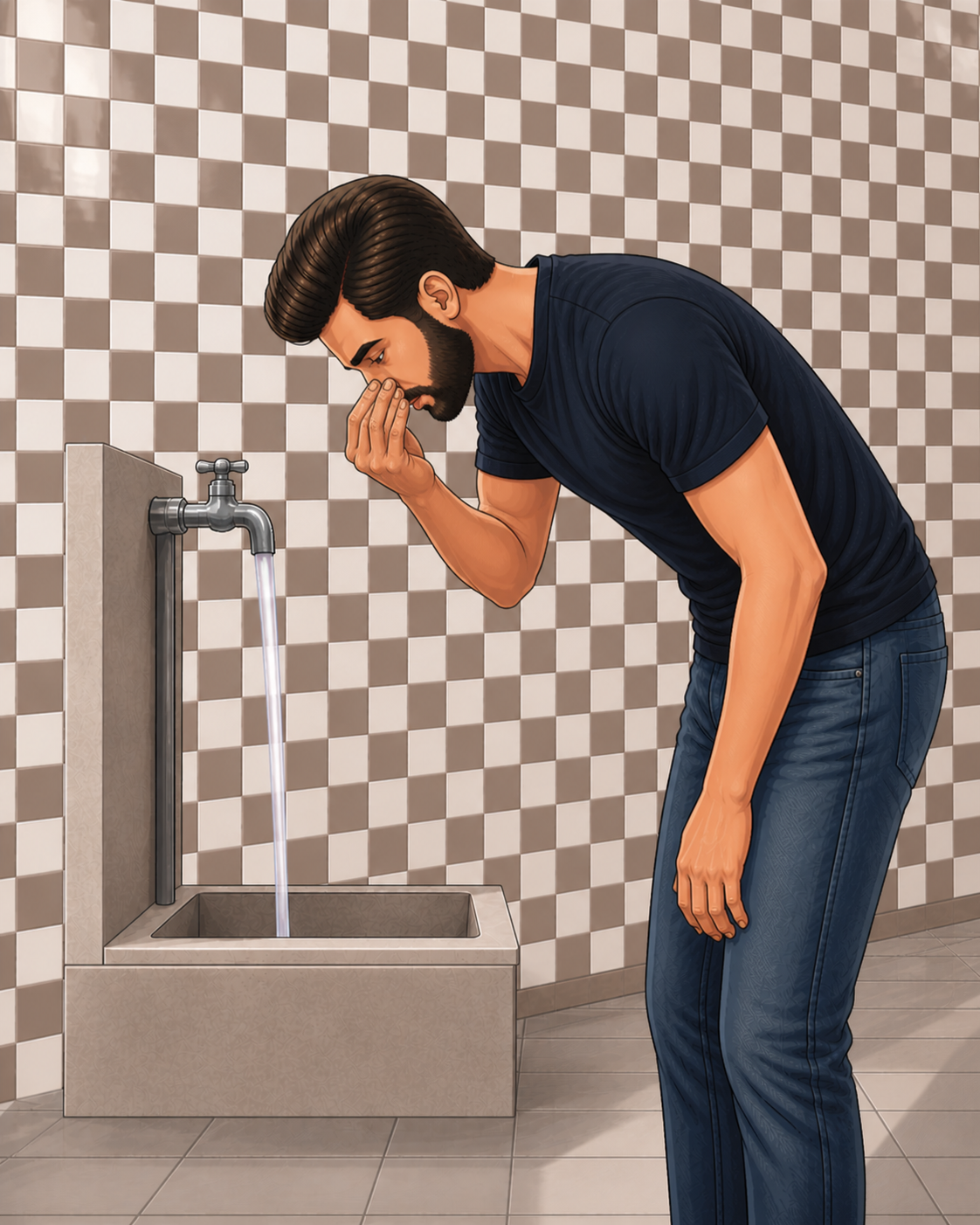
Sniff water gently up into the nostrils with your right hand (istinshāq), then expel it with your left hand (istinthār). Do this three times. Skip the deep sniff if you are fasting.
- 6
Wash your face
3×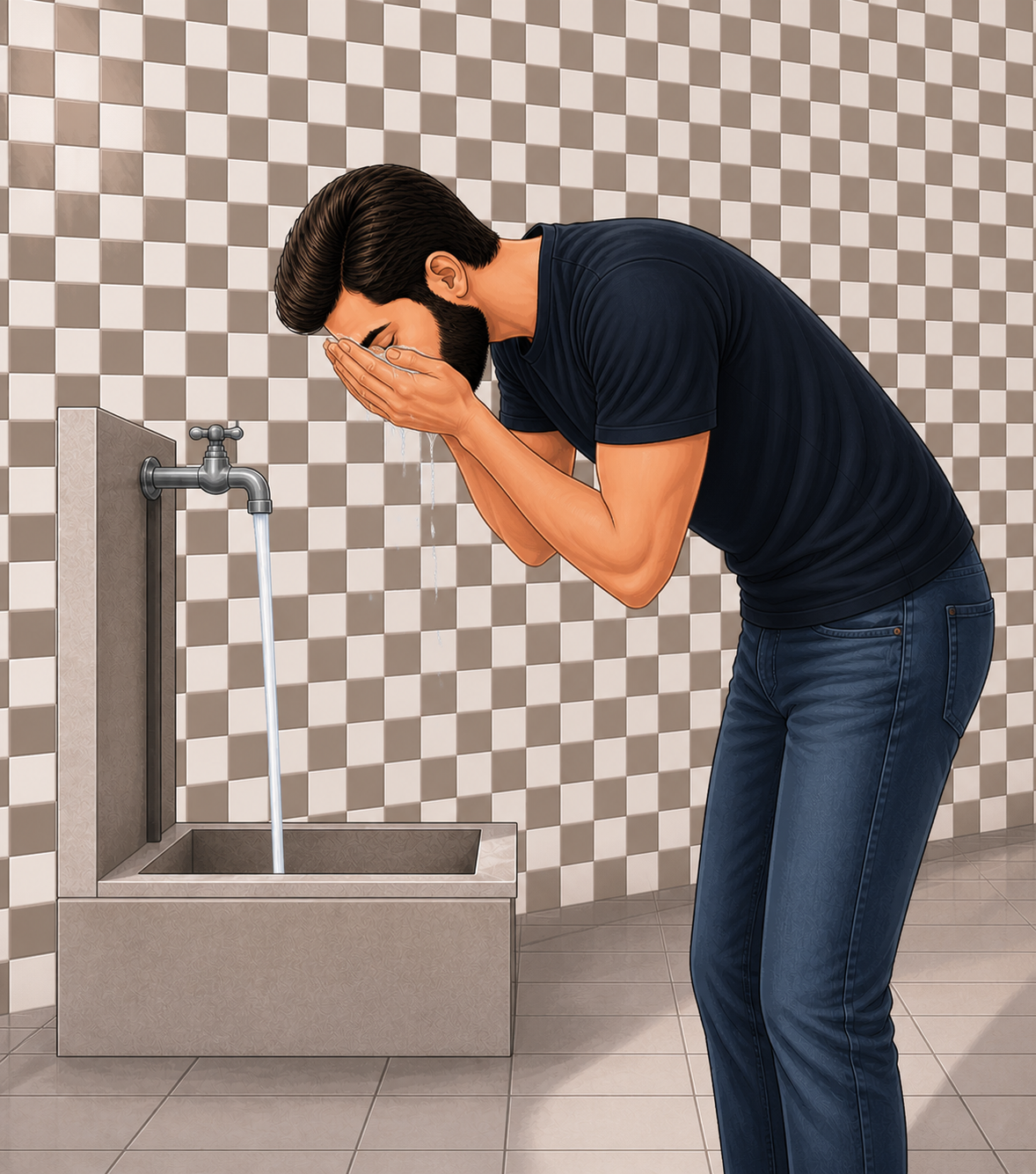
Wash your whole face three times, from the hairline down to the chin, and from one earlobe to the other. For men with a thick beard, run your wet fingers through it so water reaches the skin underneath.
This is the first of the four pillars Allah names in Sūrat al-Māʾidah 5:6.
- 7
Wash your arms
3×, right then left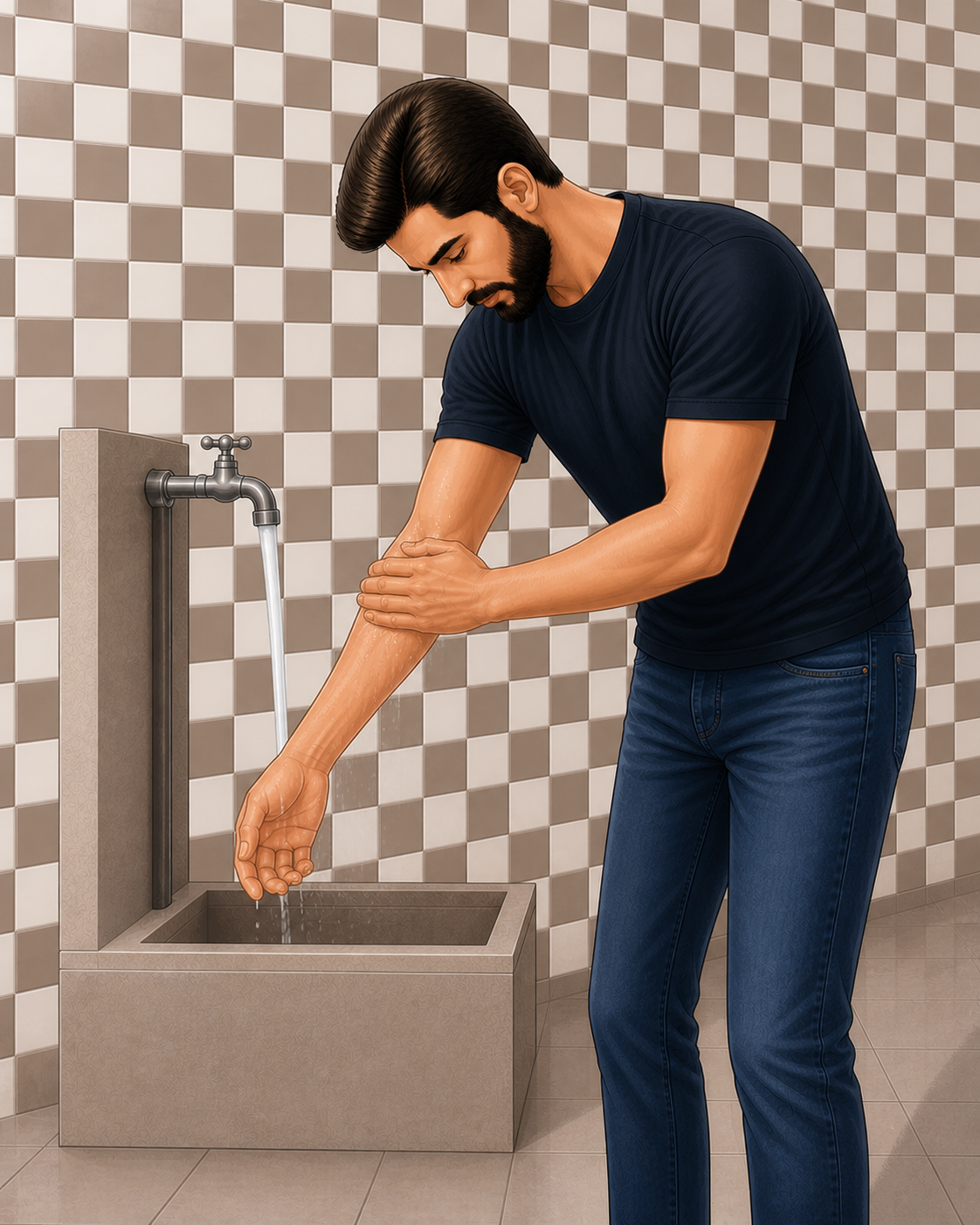
Wash your right arm from the fingertips up to and including the elbow three times. Then do the same with your left arm. Make sure water reaches the elbow itself.
- 8
Wipe your head
1×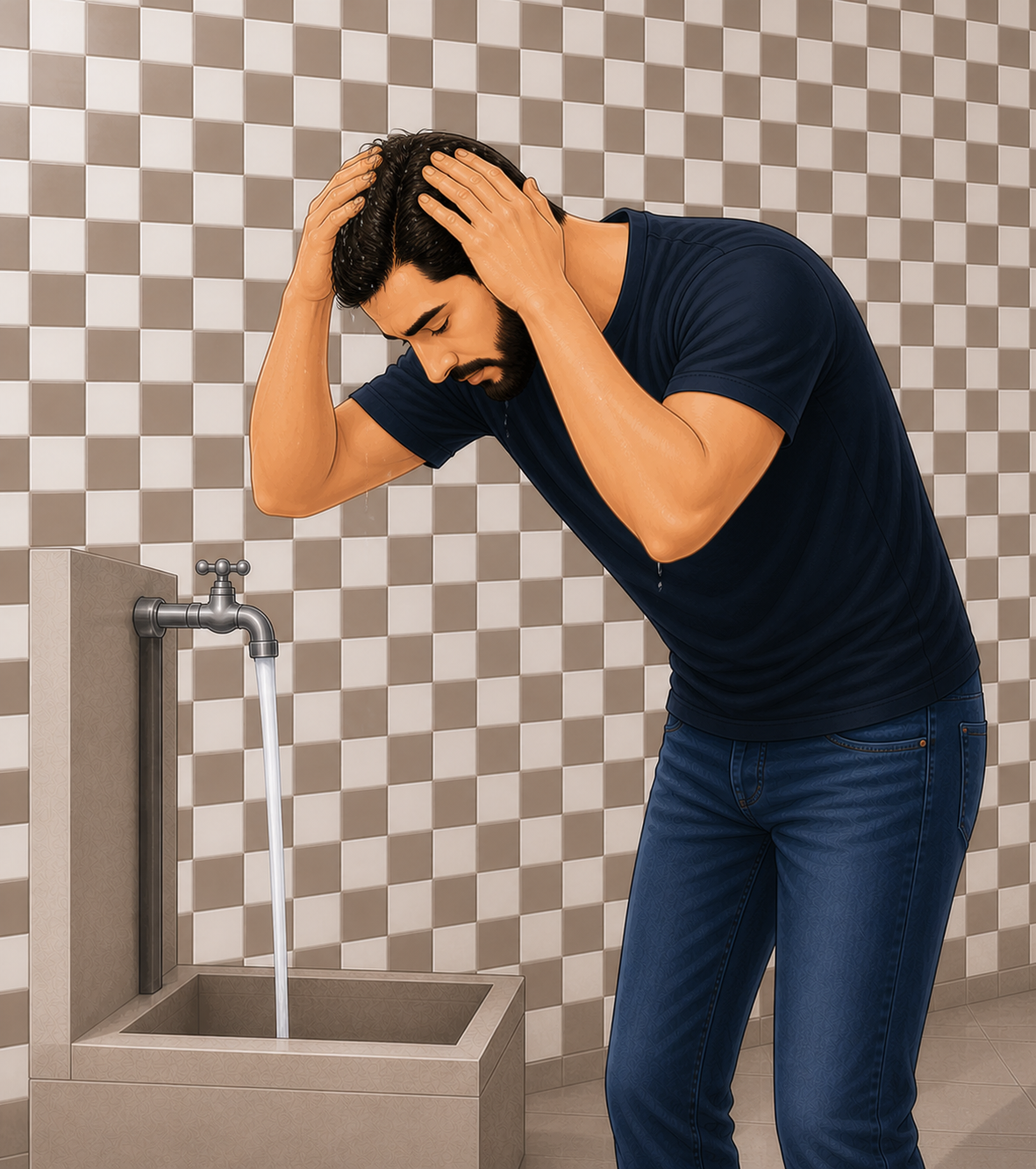
Wet your hands lightly. Place them on the front of your head and run them all the way to the back of the neck, then bring them back to the front in one motion. Once is enough, repeating the head-wipe is not part of the Sunnah.
ʿAbdullāh ibn Zayd (RA) demonstrated: he wiped his head, taking his hands to the back and bringing them to the front. (Bukhārī 185)
- 9
Wipe your ears
1×, same wet hands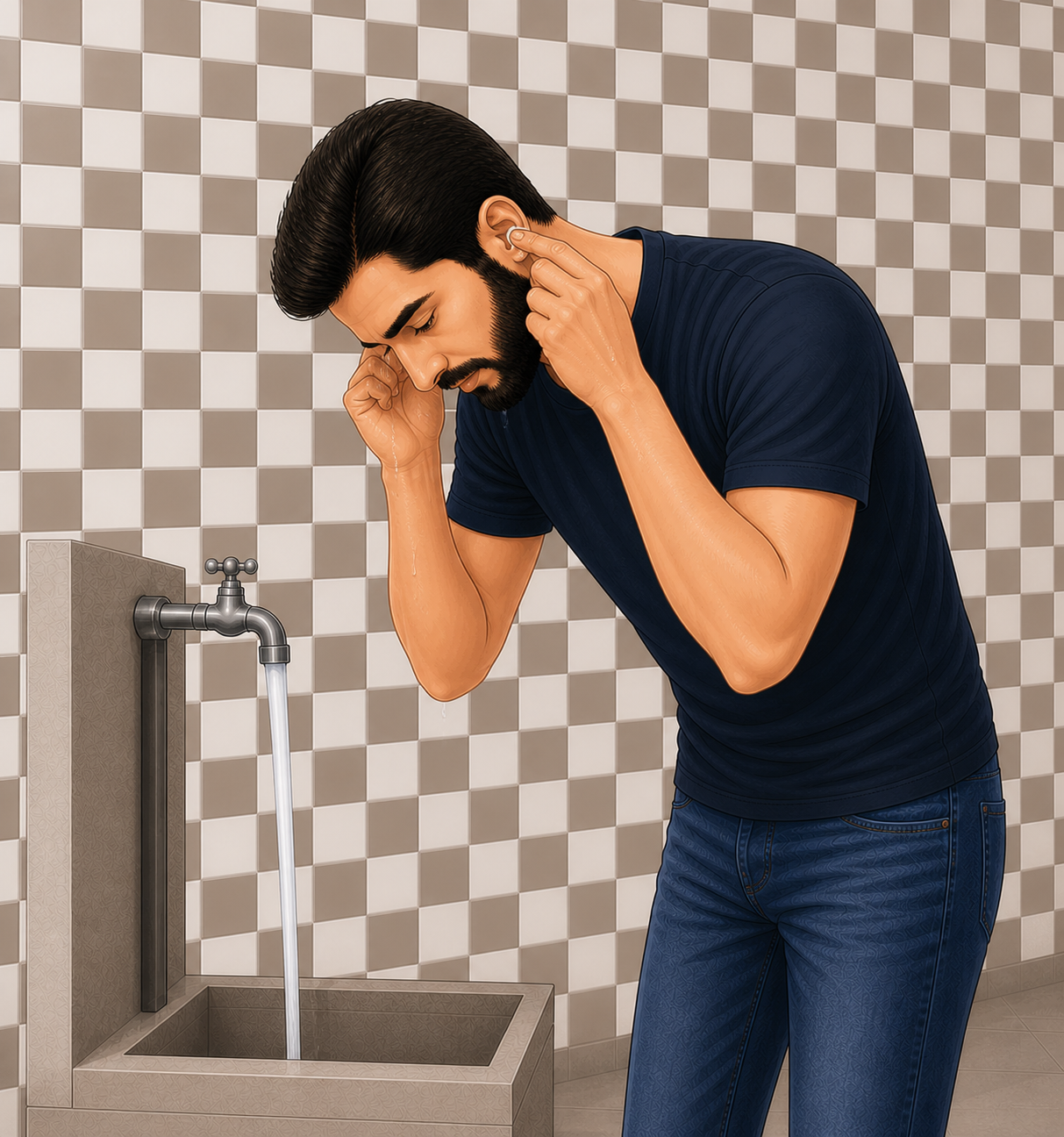
Without taking new water, use your index fingers on the inside of each ear and your thumbs on the outside. The ears are wiped with the same wetness left from the head wipe.
The Prophet ﷺ wiped the inside of his ears with his index fingers and the outside with his thumbs. (Tirmidhī 36, graded ṣaḥīḥ)
- 10
Wash your feet
3×, right then left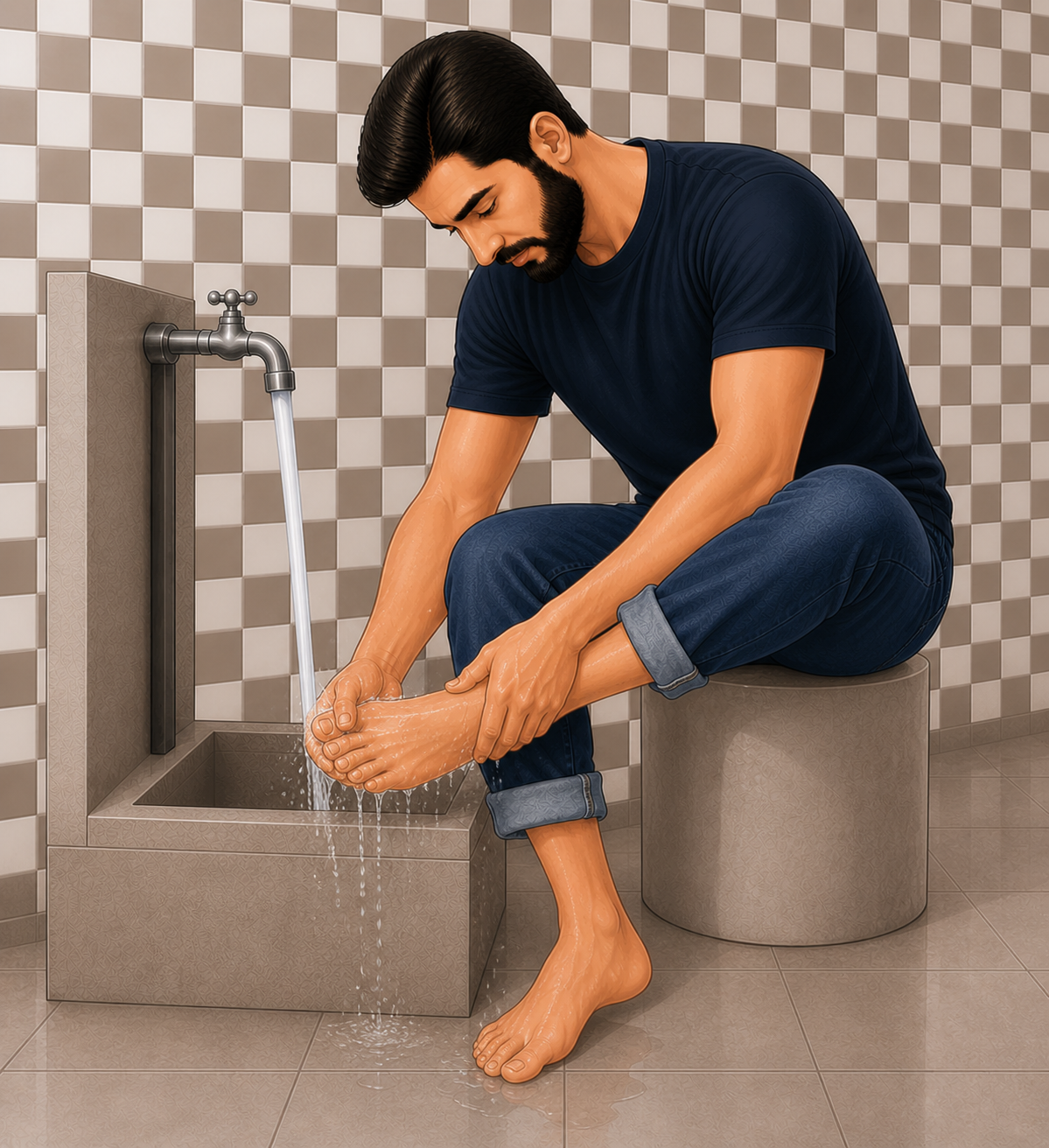
Wash your right foot three times up to and including the ankle, making sure water reaches between the toes. Then the left foot the same way.
The Prophet ﷺ said: 'Woe to the heels from the Fire', meaning, leave no dry spot. (Bukhārī 165)
When you finish, raise your gaze to the sky and recite this dua. The Prophet ﷺ said: 'Whoever performs wuḍū well, then says this, the eight gates of paradise are opened for him to enter from whichever he wishes.' (Muslim 234, with the Tirmidhī addition graded ḥasan)
Common questions
When do I have to do wudu?
Before every prayer (fard or sunnah), before touching a copy of the Qurʾān (per the majority view), and before tawāf around the Kaʿbah. Once you've performed wuḍū, you can pray as many prayers as you like with the same wuḍū until something breaks it.
What breaks wudu?
Using the toilet, passing wind, deep sleep, anything that comes out of the front or back, and (per most madhabs) bleeding heavily or losing consciousness. Light bleeding from a small cut, a small amount of vomit, or laughter does NOT break wudu in most schools.
Can I wear socks during wudu?
Once you have wuḍū, you may put on clean socks or leather slippers (khuff). For the next 24 hours (or 72 if traveling) you can wipe over the top of the socks instead of washing the feet, this is called masaḥ ʿalā al-khuffayn. The clock starts after the first nullification, not when you put them on.
What if I'm not sure I broke wudu?
You stay in your wuḍū. The Prophet ﷺ taught: certainty is not removed by doubt. Don't repeat wuḍū every time you feel uncertain, only when you're sure something invalidated it.
Can I make wudu with cold water in winter?
Use warm water if you have it, making wuḍū comfortable is encouraged. Going out of your way for cold water in harsh weather is not from the Sunnah. The Prophet ﷺ said making wuḍū well in difficult conditions is multiplied in reward.
Do I need to remove nail polish or makeup?
Yes for nail polish (and any waterproof coating), the water must reach the nail itself. For makeup, water must reach the skin, so heavy waterproof products need to come off. Plain moisturizer or oil that doesn't form a barrier is fine.
The fard count differs between madhabs (Hanafi 4, Mālikī 7, Shāfiʿī 6, Hanbali 6) but the full Sunnah sequence above covers all of them. If your local imam teaches a slightly different gesture or order, follow their guidance. More than one authentic method can be correct.